19 posts tagged with "Integrations"

View All Tags

Clearer policy settings and a redesigned Discovery

This week is about making setup clearer: you can see exactly when an Enforcement policy warns or blocks, and adding a Discovery connection is simpler.

See exactly when a device is warned or blocked

Setting up an Enforcement policy no longer means guessing what will happen. The policy settings now show a threshold timeline and a live timing summary as you edit, plus suggestion chips for common warn and block windows. You can see precisely when a device would be warned, and when it would be blocked, before you save. Enforcement stays configurable: a policy can warn or block, with or without an Awareness notification. Set up a policy

A simpler way to connect Discovery

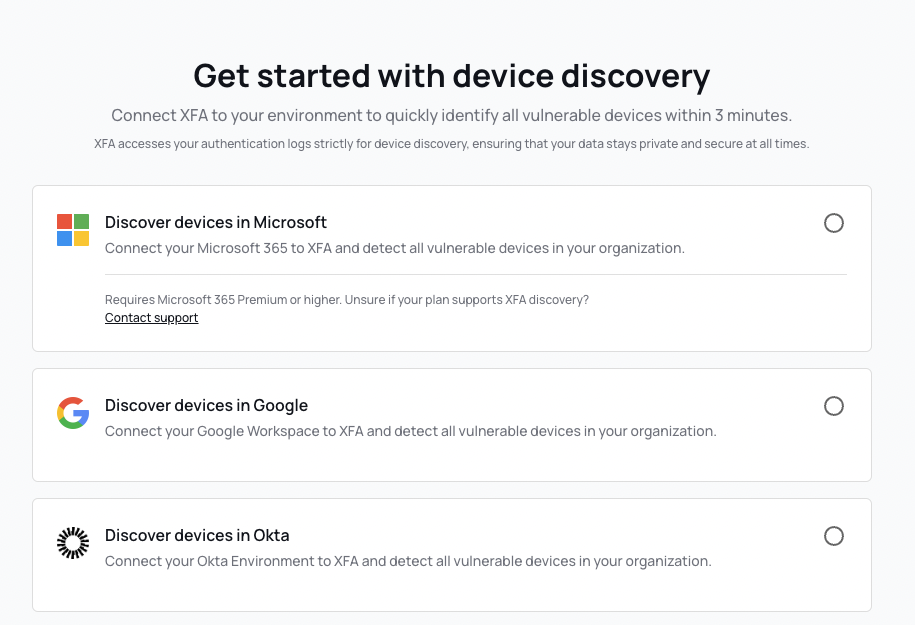
Discovery has a redesigned two-column overview and a clearer way to add a connection. Selecting Add connection now opens a provider picker for Microsoft, Google or Okta and takes you straight to a step-by-step setup page for the one you chose. Discovery reads the devices in your organization from a connected identity provider, so adding one is the first step to seeing every device in use. Connect Discovery

  • Dashboard: the Devices table now shows whether a device's Last Seen came from the XFA agent or from Discovery.
  • Dashboard: billing details and the change-address flow moved into a redesigned Subscription section, and adding a payment method now asks you to pick a plan first when none is active.
  • Dashboard: an account blocked for billing can still open Settings to download its invoices.
  • Dashboard: the Overview shows its shell and skeletons immediately for a faster first load, removing the blank white first paint.
  • Dashboard: the onboarding language switcher now uses the shared dropdown for a consistent look.
  • Integrations: you can now disconnect a Microsoft Teams connection from the Integrations page, the same as Slack.
  • Web app: the install and MFA screens have a refreshed layout and clearer copy.
  • Dashboard: the app now reloads itself once after a deploy instead of erroring on a stale page chunk.
  • Dashboard: the device-notify popup hides right away after you choose Don't show again.
  • Integrations: reconnecting Vanta no longer fails with a 500 error.

Microsoft Teams (awareness) connection

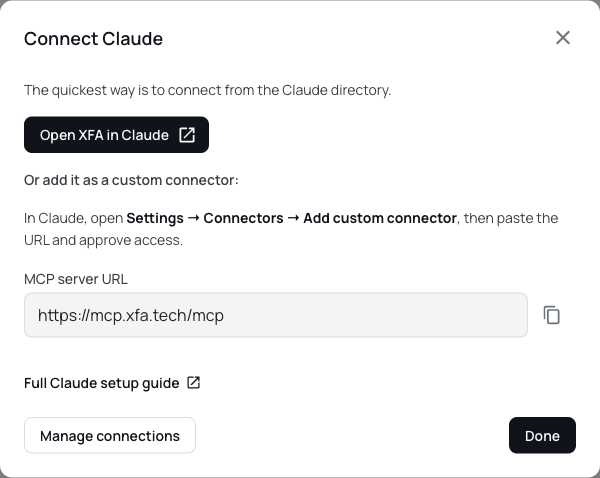
XFA now talks to your team in Microsoft Teams. Connect your tenant once, and end users receive device risk alerts, new-device enrollment invitations, and sign-in verification requests as direct messages — no email required.

Admins stay in control: toggle each notification category on or off, send a test message per section, and connect the tenant from the Integrations page in your Dashboard. Messages are localized in English, Dutch, French, German, and Spanish.

Slack (awareness) connection

XFA now talks to your team in Slack. Connect your workspace once, and end users receive device risk alerts, new-device enrollment invitations, sign-in verification requests, and safe-browsing policy notifications as direct messages — no email required.

Admins stay in control: toggle each notification category on or off, pick delivery frequency per section, and connect or disconnect the workspace from the Integrations page in your Dashboard. Messages are localized in English, Dutch, French, German, and Spanish.

Easier Linux installation

Installing XFA on Linux is now easier than ever. Simply run a single command in your terminal to get started:

curl -fsSL https://distribution.xfa.tech/xfa-native-desktop-application/install.sh | sh

No more picking the right package from a dropdown, just copy, paste, done.

Noru Integration

XFA now integrates with Noru, a GRC platform that makes compliance manageable for modern teams.

Once connected, XFA automatically syncs your device security data to Noru, giving you:

  • Automated compliance - Device security checks are continuously exported as security findings, eliminating manual compliance verification.
  • Risk mapping - Each security check is linked to a risk in Noru's risk registry, providing a clear overview of your organization's risk posture.
  • Real-time visibility - Findings are synced as they happen, so your compliance dashboard always reflects the current state.

XFA exports 23 security checks across endpoint posture, compliance, configuration, and identity & access categories.

To get started, create an API key in Noru with Write Assets and Write Risks scopes, and connect it from the Integrations page in your XFA dashboard.

Read the announcement | Set up the integration

TrustCloud Export

TrustCloud Integration

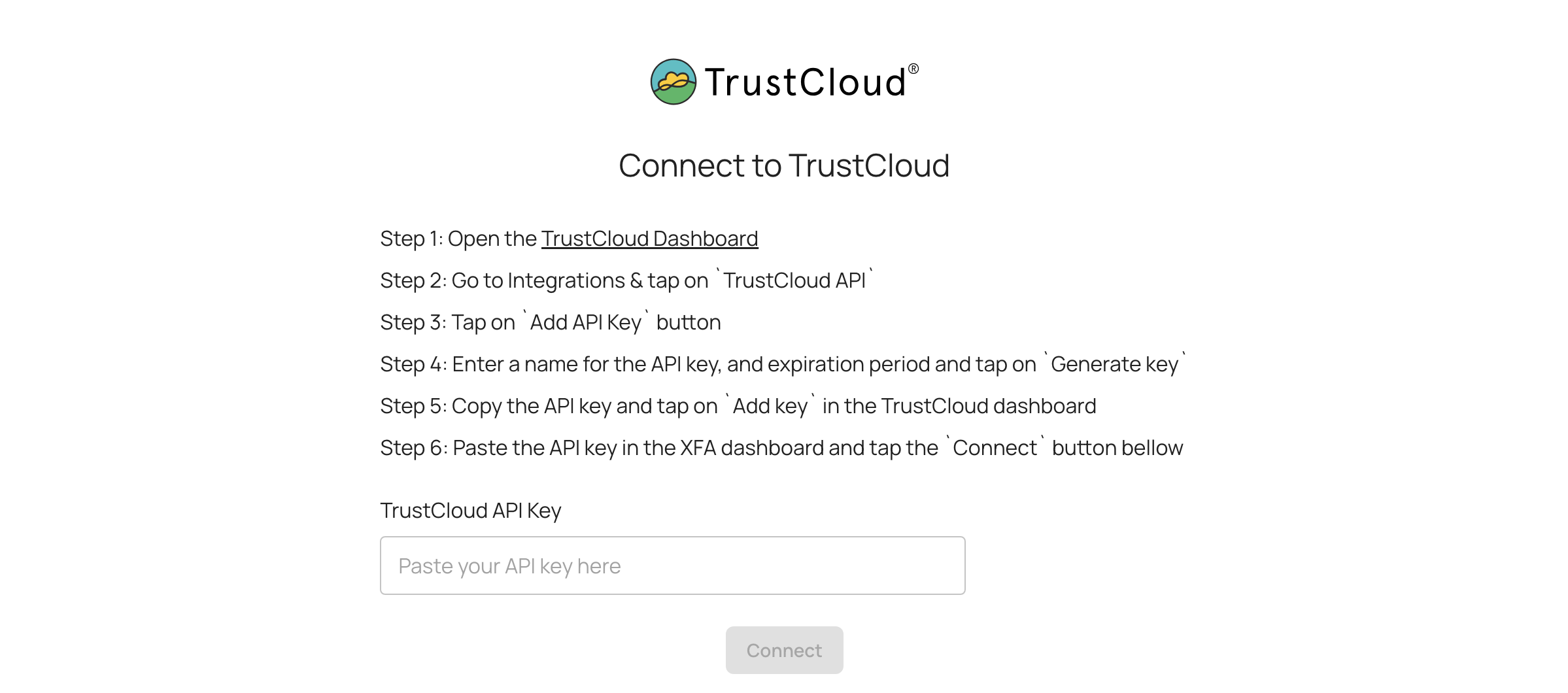
You can export your devices to TrustCloud to provide device security proof automatically for your compliance needs.

Get started in the TrustCloud Dashboard under Integrations.

Ping Identity integration


XFA can be used as a factor through the BYO MFA functionality in OneLogin. This allows XFA to be seamlessly added to any application from within the OneLogin admin dashboard, given that it uses Ping Identity as the identity provider.

When a user authenticates with Ping Identity, as an additional factor after supplying a username & password, the user is redirected to XFA to verify that the device is compliant with the device security policy before authenticating the user. This assures that only devices that comply with the security policy are allowed access.

Click here to get started in the XFA Dashboard.

More info

Enhanced Linux Support

Enhanced Linux Support

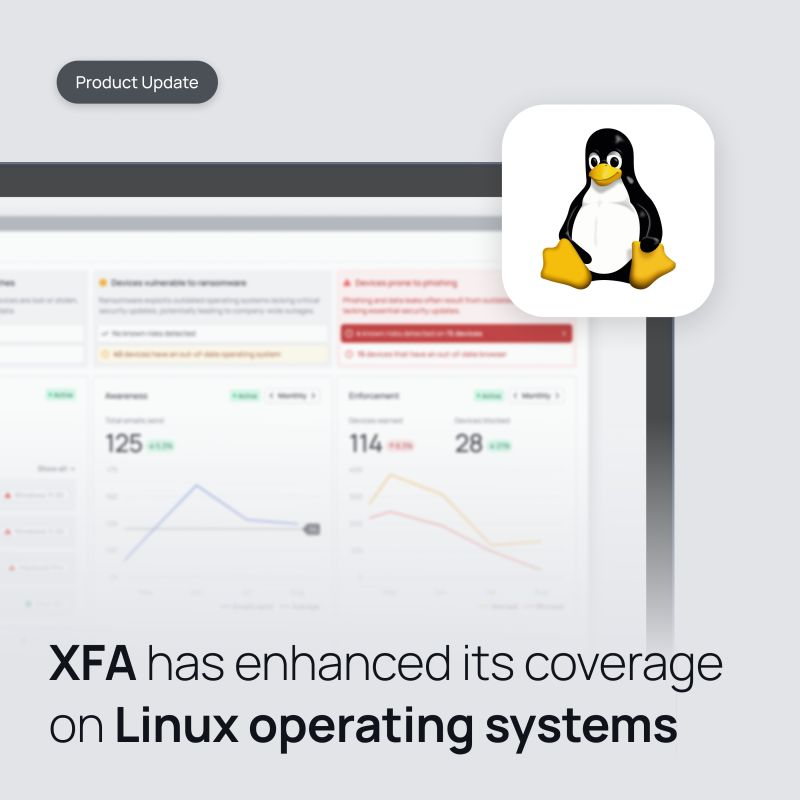
We’re excited to share that XFA has enhanced its coverage on Linux operating systems, delivering even deeper protection, broader visibility, and faster response to any potential risks. Especially on the systems that are often left out (this one is for the techies).

Desktop Application

Desktop Application

We've released our new Desktop Application for macOS and Windows. This application will replace the web extension and provide a more seamless experience for users.

The XFA Desktop Application allows dekstop devices to communicate with the XFA service and serves as a critical tool for maintaining device compliance, managing multi-factor authentication (MFA), and controlling data sharing with organizations.

info

Note: Users can uninstall their browser extension, except for Brave users who should keep it installed.

More info.

Okta Discovery

Discovery

You can now link your Okta account to XFA to discover all your devices and ensure compliance. XFA reads authentication logs and derives the devices used by each user from these logs. This will lead to a full overview of all discovered devices without verified information.

Get started in the XFA Dashboard under Discovery.

Integration with Thoropass

Thoropass Integration

XFA is now a Thoropass Partner!

You can use XFA to provide device security proof automatically for your compliance needs, pushing updates regularly to Thoropass.

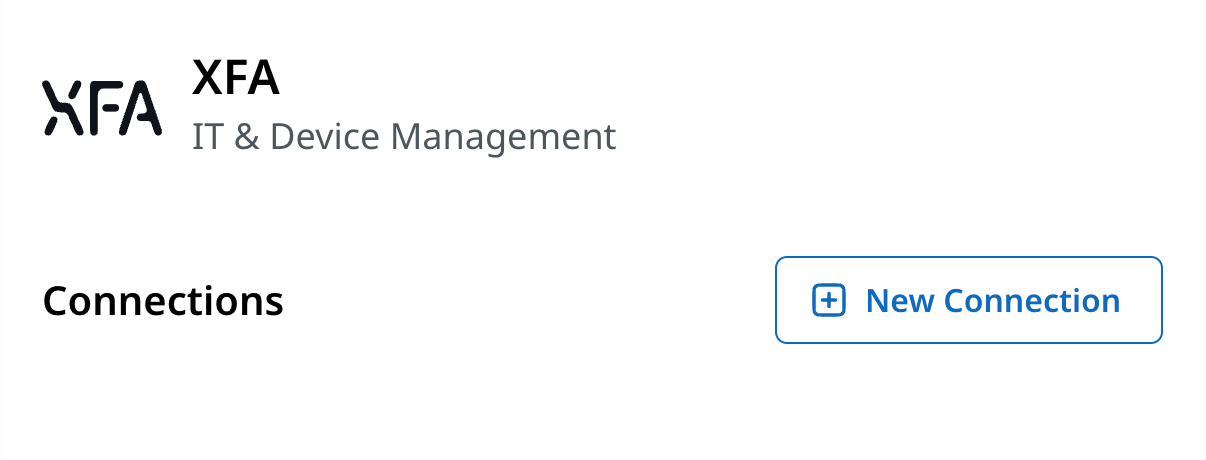
Get started in the Thoropass Dashboard > Under settings click on 'Integrations' > Find 'XFA' > click 'Learn more' > click 'Set Up Integration' > click 'New Connection' > you'll be redirected to XFA to confirm your integration.

Discovery

Discovery

You can now link your Google Workspace or Microsoft Entra ID account to XFA to discover all your devices and ensure compliance. XFA reads authentication logs and derives the devices used by each user from these logs. This will lead to a full overview of all discovered devices without verified information.

Get started in the XFA Dashboard under Discovery.

Vanta Export

Vanta Integration

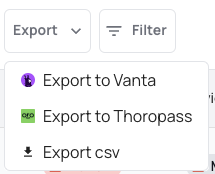
You can export your devices to Vanta to provide device security proof automatically for your compliance needs.

Get started in the Vanta Dashboard under Integrations.

OneLogin integration


XFA can be used as a factor through the BYO MFA functionality in OneLogin. This allows XFA to be seamlessly added to any application from within the OneLogin admin dashboard, given that it uses OneLogin as the identity provider.

When a user authenticates with OneLogin, as an additional factor after supplying a username & password, the user is redirected to XFA to verify that the device is compliant with the device security policy before authenticating the user. This assures that only devices that comply with the security policy are allowed access.

Microsoft EntraID integration


XFA can be used as a factor through the External Authentication Methods functionality in Microsoft EntraID. This allows XFA to be seamlessly added to any application from within the Microsoft EntraID admin dashboard, given that it uses EntraID as the identity provider.

When a user authenticates with EntraID, as an additional factor after supplying a username & password, the user is redirected to XFA to verify that the device is compliant with the device security policy before authenticating the user. This assures that only devices that comply with the security policy are allowed access.

Integration with Vanta

Vanta Integration

XFA is now a Vanta Partner!

You can use XFA to provide device security proof automatically for your compliance needs, pushing updates regularly to Vanta.

Get started in the Vanta Dashboard under Integrations.

Support for OAuth 2.0 PKCE

Support for OAuth 2.0 PKCE

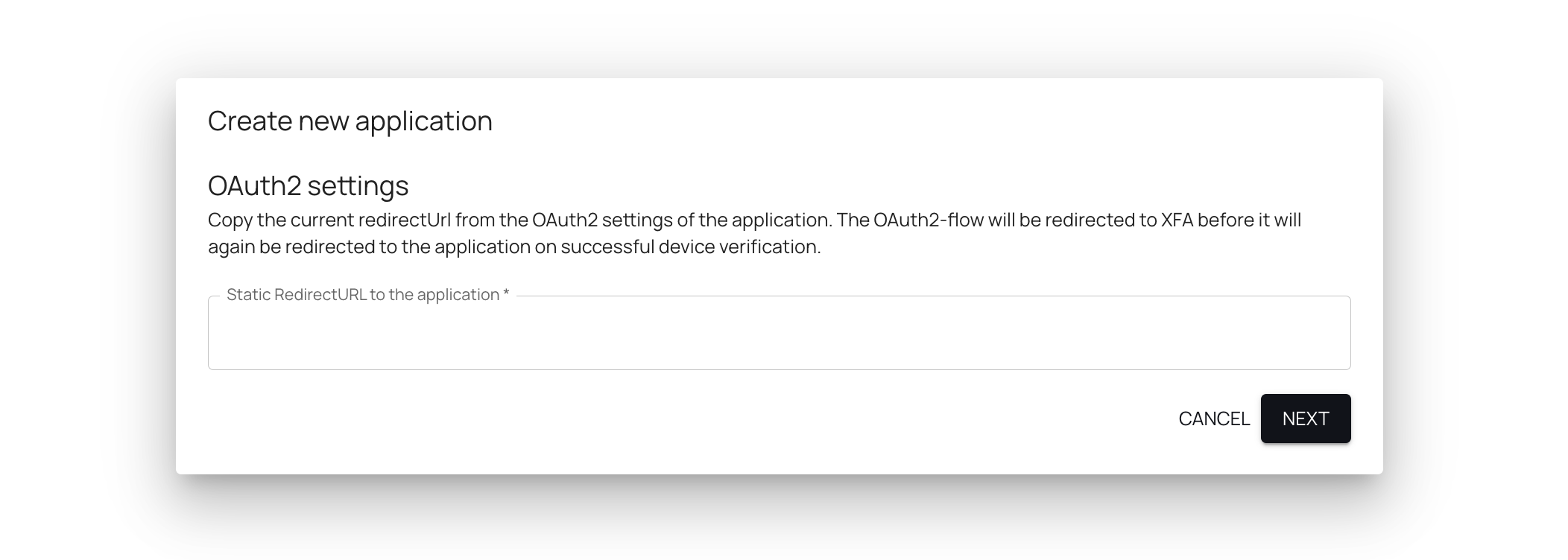
XFA now supports the OAuth 2.0 PKCE authentication method to integrate applications with XFA.

The integration works by replacing the redirectURL after authentication so users can verify their device security with XFA.

Available now through the XFA Dashboard!

Okta integration


XFA Enforcement can be used as a possession factor through the idp-factor functionality in Okta. This allows XFA to be seamlessly added to any application from within the Okta admin dashboard, given that it uses Okta as the identity provider.

When a user authenticates with Okta, as an additional factor after supplying a username & password, the user is redirected to XFA to verify that the device is compliant with the device security policy before authenticating the user. This assures that only devices that comply with the security policy are allowed access.

XFA Enforcement now supports SAMLv2

XFA Enforcement

We're excited to announce that XFA Enforcement now supports SAMLv2, or Security Assertion Markup Language 2.0, in an ongoing effort to support as many authentication standard and protocols as possible, with the mission to make it possible to secure any application and making sure that only secure devices have access.

What is XFA Enforcement?

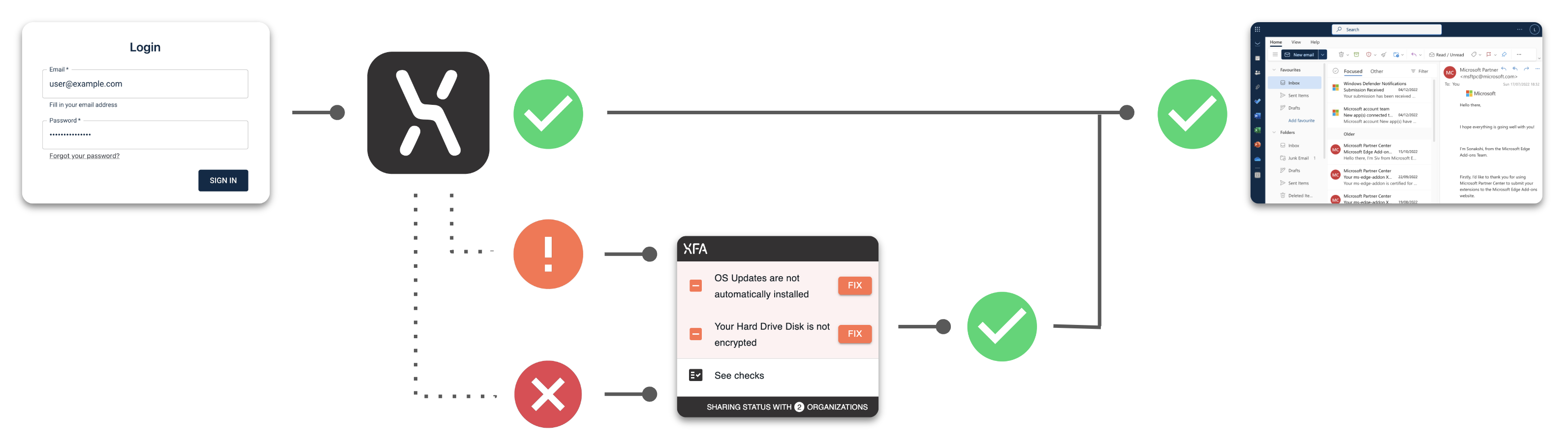
XFA Enforcement is the specialized tier of the XFA product designed to assess the security posture of devices as part of the authentication with your organization's applications.

This feature empowers you to discover all devices used in your organization and ensure that the devices interacting with your systems meet your organization's stringent security standards, whether the devices were previously known or not.
XFA Enforcement

What's New: SAMLv2 Integration

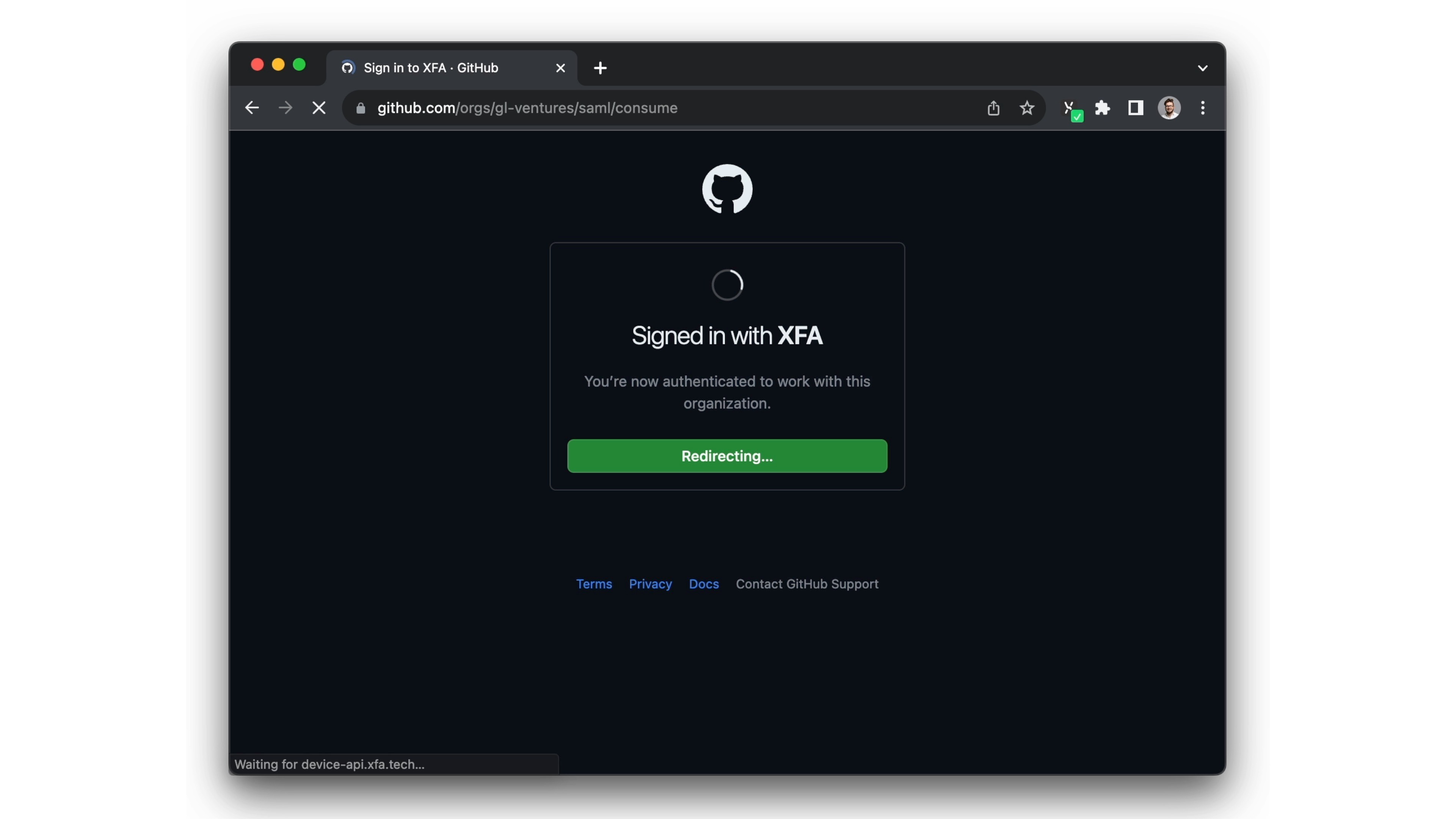
In response to the need to secure many SaaS services commonly used in an organization, XFA Enforcement now extends its capabilities to seamlessly and transparently support the SAMLv2, or Security Assertion Markup Language 2.0, authentication protocol for both the requesting application and the identity provider without making any change to the specific authentication request or content.

SAMLv2, or Security Assertion Markup Language 2.0, is one of the most common used standards for providing identity from an identity provider such as Google, Microsoft, Okta, for services such as GitHub, Slack, Jira, Notion, Salesforce, ... and so many more.

How to get started?

For detailed insights into integrating with these specific applications, please refer to our comprehensive integration guides.

Should you have any queries or require assistance, our dedicated support team stands ready to assist you.

We look forward to bringing you many more updates in the future!